
Settling in Your New Rescue Cat: Helping Your Cat Feel Safe in Their New Home
Bringing home a rescue cat is a wonderful experience, but it’s important to remember that moving into a new environment can be stressful for cats. Rescue cats need time, patience, and understanding as they adjust to unfamiliar people, sounds, smells, and routines.
Every cat settles differently. Some may feel confident within days, while others may take weeks or even months before they fully relax in their new home. Creating a calm, secure environment from the beginning can make a huge difference in helping your rescue cat feel safe and comfortable.
Understanding the Rescue Cat Adjustment Period
Cats are naturally territorial animals, so a change in environment can feel overwhelming at first. Your new rescue cat may spend time hiding, avoiding interaction, or appearing nervous while they get used to their surroundings. This is completely normal.
Giving your cat space and allowing them to settle at their own pace will help build trust over time.
Signs Your Rescue Cat Is Settling In
As your rescue cat becomes more comfortable, you may notice:
- Increased curiosity around the home
- Improved appetite
- More relaxed sleeping habits
- Seeking affection or interaction
- Playing more confidently
- Exploring new areas independently
Every cat is unique, so try not to compare their progress to others.

An improved appetite is a good sign your cat is settling in
Give Your Rescue Cat Time and Space
One of the most important things you can do is provide your cat with safe spaces where they can retreat if they feel overwhelmed.
Helpful ideas include:
- Covered beds or hiding spots
- Quiet rooms away from household noise
- Elevated resting places such as shelves or cat trees
- Multiple comfortable sleeping areas around the home
Allow your cat to come out and explore in their own time rather than trying to force interaction.
Keep Your Rescue Cat Indoors Initially
We recommend keeping your new cat indoors for at least six to eight weeks before allowing outdoor access.
This gives your cat time to:
- Learn where home is
- Bond with family members
- Become familiar with household routines
- Feel secure in their environment
When you eventually begin supervised outdoor access, start slowly and ideally let your cat out before mealtimes so they are encouraged to return home.
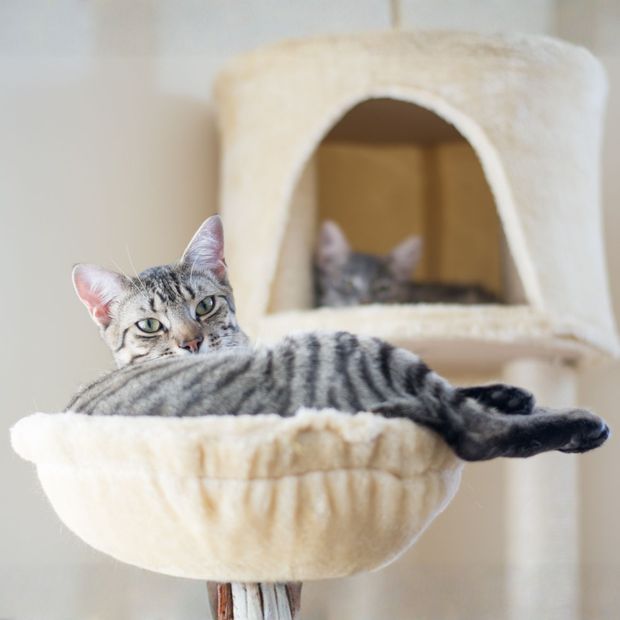
Providing elevated resting places such as shelves or cat trees helps your cat feel safe and secure
Create a Cat-Friendly Home Environment
Cats feel safest when they have opportunities to climb, scratch, hide, and observe their surroundings.
Essential Ways to Make Your Home Cat Friendly
- Provide sturdy scratching posts
- Offer beds and resting spots at different heights
- Use interactive toys and feeders for mental stimulation
- Keep litter trays in quiet, accessible locations
- Create calm spaces away from busy household activity
Interactive feeding toys can also help satisfy natural hunting instincts while your cat remains indoors.
Keep a Consistent Routine
Like dogs, cats benefit from predictable daily routines. Feeding, playtime, and quiet periods at regular times each day help your cat feel secure and reduce stress.
Consistency is especially important during the first few weeks after adoption.
Introduce Other Pets Gradually
If you already have pets at home, introductions should happen slowly and carefully.
Helpful tips include:
- Keeping pets separated initially
- Swapping bedding or scents before face-to-face meetings
- Allowing short, supervised introductions
- Ensuring each pet has their own safe space
Never force interaction between animals, as this can increase stress and create negative associations.

It's important to introduce other pets slowly and carefully
Keep Your Cat’s Diet the Same Initially
It’s very common for rescue cats to eat less when they first arrive home. Stress can temporarily affect appetite.
To help your cat settle:
- Continue feeding the same food initially
- Avoid sudden dietary changes
- Introduce new foods gradually over 1–2 weeks
- Monitor appetite and weight closely
If your cat stops eating completely or appears unwell, contact your vet promptly for advice.
Register With Your Vet and Update Identification
After bringing your rescue cat home, make sure to:
- Register with a local vet
- Store vaccination and microchip details safely
- Arrange appropriate pet insurance if desired
- Ensure microchip details are updated with your contact information
These steps help protect your cat and provide peace of mind.
Build Trust Through Patience and Positive Interaction
Cats build trust gradually. Some may seek affection quickly, while others prefer space and observation first.
You can help strengthen your bond by:
- Speaking softly and calmly
- Allowing your cat to approach you first
- Using treats and play for positive association
- Respecting signs that your cat needs space
Avoid overwhelming your cat with too much handling or attention during the early days.
Final Thoughts: Let Your Rescue Cat Settle at Their Own Pace
Adjusting to a new home takes time for any rescue cat. By providing a safe environment, maintaining routines, and allowing your cat to build confidence gradually, you can help them feel secure and loved.
Patience is key. With time, understanding, and gentle encouragement, your rescue cat will begin to relax and truly feel at home.