
Introducing a New Cat to Your Current Cat
Thinking about adding another cat to your family? Bringing a new cat home can be an exciting experience, but it's important to remember that cats are naturally independent animals and may need time to adjust to sharing their space.
Some cats will adapt to a new feline housemate more easily than others. However, taking a gradual approach and allowing both cats to become familiar with one another before meeting face-to-face can help reduce stress and give them the best chance of building a positive relationship.
At the National Animal Welfare Trust (NAWT), we recommend following these steps when introducing a new cat to your current cat.

1. Start scent swapping before your new cat comes home
You can begin preparing your cats for their introduction while your new cat is still in our care.
Scent swapping helps both cats become familiar with one another before they meet in person.
One way to do this is to place a towel in your existing cat's bed to collect their scent. Alternatively, if your cat is comfortable with it, you can gently move a towel over them to collect their scent.
Once you have an item carrying each cat's scent, swap them over and place the scented towel in the middle of the floor for the other cat to investigate.
It's important not to place the scented item directly into either cat's bed, as this could feel threatening to them. Instead, allow each cat to approach and explore the scent at their own pace.
2. Set up a separate room for your new cat
Before bringing your new cat home, prepare an individual room where they can settle in.
This room should contain everything your new cat needs, giving them a comfortable and secure space of their own while they adjust to their new surroundings.
Keeping the cats separate initially allows your new arrival to become familiar with their environment without the added pressure of immediately meeting another cat.
It also gives your existing cat time to become accustomed to the new scent in their home.
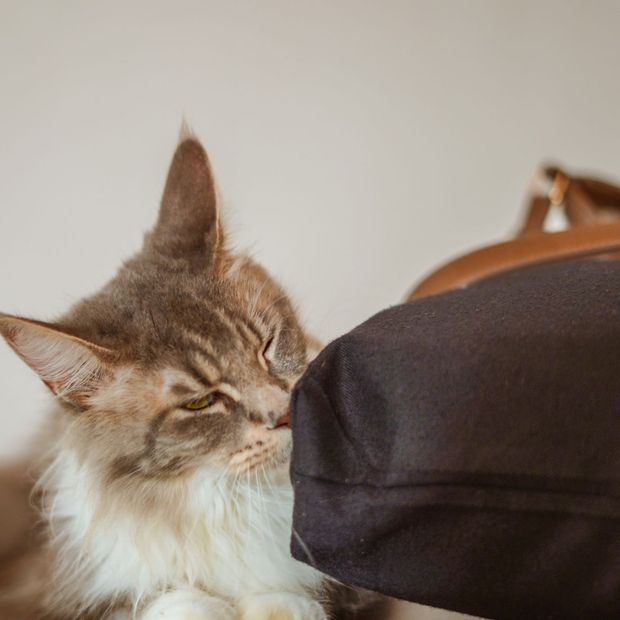
Bringing your new cat's scent into the home early helps your cat become familiar with them before meeting in person
3. Continue scent swapping
Once your new cat is home, you can refresh the scent-swapping process using items that carry each cat's scent.
This helps maintain familiarity as your new cat settles into their surroundings.
Allow both cats to investigate the scented items in their own time. Remember not to place these items in their beds, as this may make them feel threatened.
Wait until both cats appear comfortable with one another's scent before moving on to the next stage.
4. Introduce visual contact using barriers
Once your cats are comfortable with each other's scent, you can begin allowing them to see one another.
Use suitable barriers to introduce visual contact, making sure the process feels as natural as possible rather than forcing an interaction.
Allow both cats to observe one another from a comfortable distance, with the freedom to move away whenever they wish.
Keep an eye on how they respond and don't move on to the next stage until both appear comfortable.
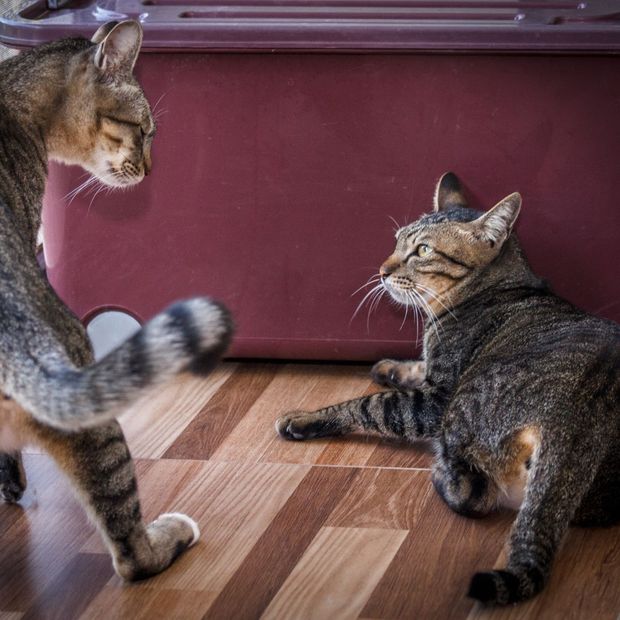
Allow both cats to interact from a comfortable distance
5. Gradually remove the barriers
When interactions through the barriers are going well, you can begin allowing your cats to spend time in the same space without them.
It's important that these first face-to-face meetings are short and positive. Keep introductions brief and finish while both cats are still happy and comfortable around one another.
Both cats should always have somewhere to hide and enough room to escape if they feel overwhelmed.
Never force them to approach one another or remain together. Allowing them to make their own choices will help build confidence and reduce the risk of conflict.
6. Provide plenty of resources around your home
Once your cats are comfortable in one another's presence, it's important to make sure your home has plenty of resources for both.
Cats are naturally solitary animals, although they can live in groups when there are sufficient resources available.
Having multiple food and water bowls, beds and comfortable resting places can help reduce competition and the risk of hostility.
The aim is to make sure neither cat feels they need to compete for access to the things they need.
Introducing a Kitten to an Older Cat
If you're introducing a kitten to an older cat, there are a few additional things to consider.
Kittens can sometimes squeeze through barriers that would normally keep an adult cat separate, so make sure any barriers you use are suitable and secure.
You may also need to give your kitten some playtime and opportunities to burn off energy before introductions with your older cat. Kittens are often full of energy, and this can sometimes be overwhelming for a more settled adult cat.
Remember that your kitten and older cat will have different needs. Making sure you spend one-to-one time with each of them is essential so that both receive the attention, play and care they need.
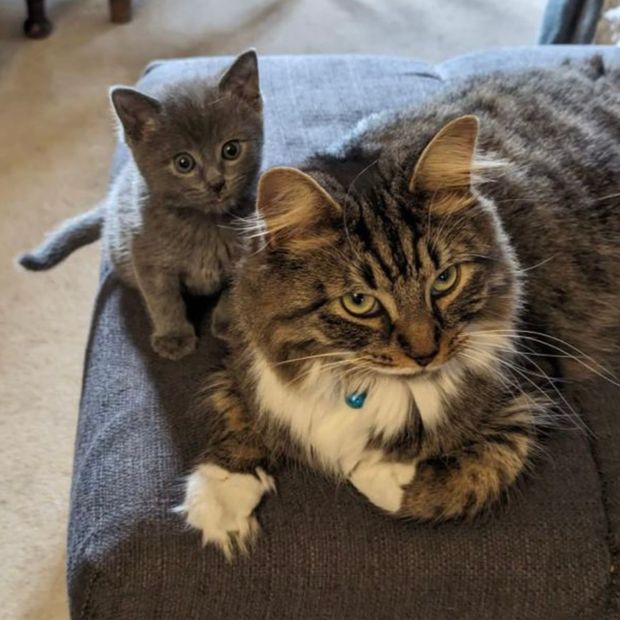
Spending one-on-one time with both your cat and kitten ensures they both receive the attention they need
Be Patient and Let Your Cats Set the Pace
Introducing a new cat to your current cat is not something that should be rushed. Every cat has their own personality and preferences, so some may become comfortable around one another sooner than others.
The most important thing is to allow both cats to progress at their own pace, ensuring they always have access to safe spaces and plenty of resources.
With patience, careful preparation and positive experiences, you can help your cats adjust to sharing their home.