World Mental Health Day: River’s story and the importance of animal wellbeing
This World Mental Health Day, we’re shining a light on the emotional wellbeing of the animals in our care, the people who dedicate their time to helping them, and the special connections that can change lives on both sides.
When an animal arrives at a rescue centre, their needs can go far beyond food, shelter and veterinary treatment. They may need time to feel safe, patience to rebuild their confidence and an environment where they can truly relax.
At the National Animal Welfare Trust (NAWT), we know that every animal is an individual. While some settle into kennel life relatively well, others can struggle in ways that aren't always immediately obvious.
River’s story is a powerful reminder of just how important emotional wellbeing is to animal welfare – and why understanding an animal means looking beyond what we can see.
River’s story: When stress takes its toll
River first came into NAWT’s care in 2024. Sadly, he was returned to our Bedfordshire centre in November 2025 when his owner could no longer manage him.
He was a sweet boy who loved human company, but his return to kennels proved particularly difficult. During his stay, which lasted just under five months, River’s weight dropped dramatically.
He arrived weighing 40kg, but despite extensive veterinary investigations, his weight continued to fall, eventually reaching just 32kg.
Our team did everything they could to help him. River had a good appetite, so we fed him large quantities of puppy food to try to maintain his weight. Even with this additional food, however, we could only prevent him from losing more.
What made River’s situation especially challenging was that he didn't appear obviously distressed. He was generally well behaved and seemed to cope with kennel life as well as could be expected. He would bark for much of the day in response to other dogs, but he absolutely loved spending time with his handlers and volunteers.
River craved human interaction. Whenever someone had time to take him out or spend a little longer with him, he made the most of every moment. Some of our volunteers would spend much of their time with him whenever they could, knowing how much he enjoyed their company.
Alongside his weight loss, River returned to us with new scars and an eye infection that was diagnosed as dry eye, a condition requiring regular lubrication and ointment throughout his stay.
Despite extensive veterinary tests, extra food and enrichment, we couldn't understand why River wasn't regaining weight.
Then, over Christmas, an opportunity arose that would change everything.
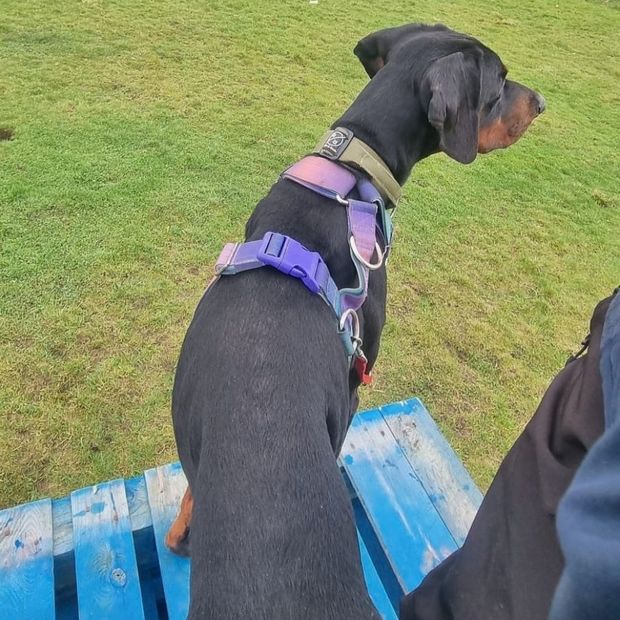
River's weight dropped to just 32kg whilst living in kennels
A breakthrough: Four kilograms in two weeks
While waiting for his veterinary results, River spent a short trial period in a foster home. The aim was to see how he coped away from the kennels, and the difference was remarkable.
Within just two weeks in a home environment, River gained 4kg.
After struggling to maintain his weight in kennels despite eating well, River was finally putting weight back on.
Unfortunately, the foster arrangement couldn't continue, and when River returned to the centre, his weight began to drop again.
This gave the team a much clearer understanding of what was happening. After ruling out other causes through veterinary investigations, we concluded that the stress of kennel life was preventing River from maintaining a healthy weight.
It was a stark reminder that an animal doesn't always have to display obvious signs of distress for their emotional wellbeing to be suffering. River appeared to cope with his surroundings, but his physical health was telling us a different story.
We launched an appeal for a foster home, hoping to find someone who could offer him the quieter environment he needed. Sadly, finding the right match proved difficult because of his size and reactivity towards other dogs.
As time passed, the team grew increasingly worried about him. One colleague, who had formed a close bond with River, became so upset that they asked whether he might have to be put to sleep. They were heartbroken at the thought that, despite everyone's efforts, there might be nothing more they could do to help him.
It was an incredibly difficult situation for the people who cared for River. They had tried everything they could, but the home environment he needed remained frustratingly out of reach.
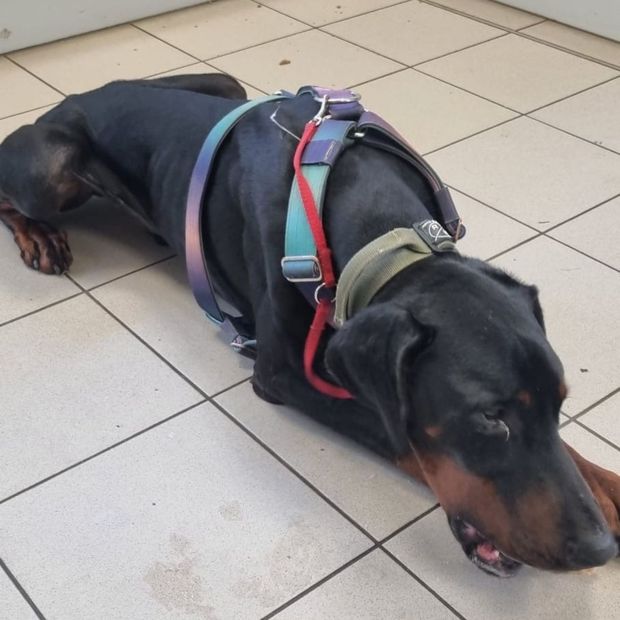
It was clear that River was finding kennel life stressful
Finally, a second chance
Then, eventually, River's lovely adopter came along – and the rest, as they say, is history.
After everything he had been through, River finally found someone who could offer him the home environment he needed. His story is a reminder that sometimes, even when we do everything possible for an animal in our care, the right home can make a difference that nothing else can replicate.
River's journey highlights an important part of animal welfare that can sometimes be overlooked: an animal's emotional wellbeing is just as important as their physical health.
For River, extra food and enrichment weren't enough to reverse his weight loss. What he needed most was the security and comfort of a home.
And his story has had an impact on his adopter, too.
Reflecting on their relationship, River's owner told us:
“I’m not really sure who rescued who in this case.”
After a relationship breakdown, they had been spending a lot of time alone at home and weren't feeling their best. Having River by their side brought companionship and a new sense of purpose to everyday life.
River needed a second chance, and in finding it, he brought something special into his adopter's life, too.
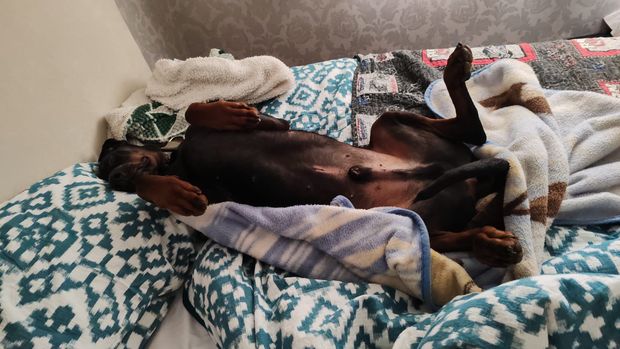
River is now thriving in his loving forever home
The people behind the animals: How volunteering can make a difference
River's story shows why finding the right environment is so important for an animal's wellbeing. But it also reminds us of the people who dedicate their time to making these second chances possible.
At NAWT, our volunteers play an invaluable role in supporting the animals in our care. They offer companionship, help with daily activities and bring kindness and patience to the centre.
For some, volunteering also brings a renewed sense of purpose, a regular routine and friendships they might not otherwise have found.
We've spoken to three of our Cornwall volunteers about what being part of the NAWT family means to them.
“I look forward to it every week”
One of our volunteers began helping at NAWT Hayle after finishing their working career. With more time spent at home, they found themselves becoming bored and decided to apply after spotting an advert for a reception volunteer on Facebook.
They now volunteer one morning a week and look forward to every visit.
“I look forward to it every week and am gutted if something happens to prevent me from going,” they told us.
Volunteering gives them a reason to get out of the house, meet new people and spend time around the cats and dogs in our care. They also enjoy helping visitors, supporting fundraising events and catching up with staff and other volunteers.
“I get to see all the cats and dogs and feel elated when one of them gets adopted.”
For them, volunteering has become an important part of their weekly routine, bringing enjoyment, social connection and a sense of purpose.
They added: “I think that without my volunteering job I could definitely become someone who could suffer from Mental Health, so thank you!”
“Something in me felt lighter”
Another volunteer came to NAWT at a particularly difficult time in their life.
In 2019, they had recently lost their mother after caring for her for over a year. Just a few months later, they lost their beloved cat, Daisy. This followed six months of recovery from a serious car accident, leaving them at a low point.
They initially visited NAWT hoping to adopt another cat but soon realised it was too early. They still wanted to be around cats, however, and decided to attend a volunteer open day.
“Even on the way to the open day, something in me felt lighter, as though this was a new start,” they recalled.
As they began helping with the cats regularly, they found their spirits gradually lifting. Although there were still difficult days, volunteering gave them somewhere to go, something to focus on and the opportunity to spend time with animals and people who cared.
Then came Sheba, a little black kitten who was still in isolation.
“There was something about her that just felt right,” they said.
They asked to be the first to meet her and haven't looked back since.
Now working full time, they can still give one morning a week to the centre, and that time remains important to them.
“I think volunteering has been a really positive influence on my life and I would recommend it to anyone. As someone who lives alone, I think it is helpful to have some sort of regular routine.”
Their experience is a lovely reminder that volunteering doesn't have to mean giving up huge amounts of time. Even a few hours each week can become a meaningful part of someone's life.
“My life has turned around dramatically”
For another of our volunteers, NAWT Hayle has always held a special place in their heart. Having previously adopted two German Shepherd Dogs from us, they have long been passionate about animals and their rescue and rehabilitation.
Before becoming a volunteer, they would occasionally visit the centre with donated cat and dog food while enjoying trips to Hayle for two other passions: birdwatching and walking.
Following the breakdown of a 20-year marriage, however, they experienced periods of depression and anxiety, with feelings of guilt and loneliness making some days particularly difficult.
During one visit to the centre, a conversation with two members of our reception team led to an invitation to become a volunteer. Looking back, they describe it as one of the best decisions they have ever made.
“My life has turned around dramatically! I no longer feel depressed and alone, I literally spend that much time there I have to be 'turned away'! Ha, ha.”
They absolutely love their volunteer role, spending time with the animals and getting to know the people who make up the NAWT Cornwall team.
For them, it's about much more than caring for animals. The friendships, social interaction, laughter and friendly banter have all become an important part of their life.
“I absolutely love my volunteer role at NAWT, working with lovely animals and lovely people, really is 'what the Doctor ordered.' To me, it’s not just the love of the animals, but the love of the people and the social side too.”
They summed up their experience with a sentiment that captures the welcoming community our volunteers help create:
“We are one big happy, lovely family and I have never looked back!”
Looking after every kind of wellbeing
River's story and the experiences of our volunteers highlight different sides of the connection between people and animals.
For River, the right home environment was essential to his wellbeing. For our volunteers, spending time caring for animals has brought routine, companionship, friendship and a sense of belonging.
Of course, everyone's experience is different, and volunteering or having an animal in your life isn't a replacement for professional mental health support. But these stories demonstrate how meaningful the connections between people and animals can be.
At NAWT, our priority is always the welfare of the animals who come through our doors. That means looking after their physical health while also recognising their individual emotional needs, giving them time to settle, and finding the right environment in which they can thrive.
It also means celebrating the staff, volunteers, foster carers, adopters and supporters who make this work possible.
This World Mental Health Day, we're thinking about the wellbeing of every animal in our care, as well as the people who help them along the way.
Because every animal deserves to feel safe, understood and loved – and every second chance starts with someone who cares.
Could you be part of their story?
There are lots of ways to help animals in need at NAWT. Whether you can offer a loving home, become a foster carer, volunteer your time or donate towards our work, every contribution helps us provide the care and support our animals deserve.
You never know whose life you might change – or what that connection might mean to you, too.